


LittleMum Back Deep Tissue Massager
LittleMum Back Deep Tissue Massager
Body-weight massage tool, Designed by LittleMum
Couldn't load pickup availability
-
A firm body-weight massage tool designed to create concentrated pressure across muscular areas of the back, hips, and gluteal region.
- Six sculpted contact ridges create more focused pressure than a broad foam roller or all-silicone massager.
- A central channel helps position the contact areas on the muscles beside the spine and sacrum.
- The curved structure can be used lying down or against a supportive chair.
- Turn the tool over to change from concentrated muscular contact to a supported back-stretching position.
- A high-strength aluminum alloy core holds the designed angles under load, while the silicone coating provides grip and controlled cushioning.
- Non-electric construction backed by a 15-year warranty.
Best for: People who prefer firm, concentrated pressure and want a compact tool for the back, hips, and gluteal area.
Not ideal for: Anyone looking for soft support, gentle relaxation massage, powered kneading, or broadly distributed pressure


Prefer to buy on Amazon?

Designed Around the Problem
Some muscular areas of the back, hips, and gluteal region are too padded or difficult to approach with broad, surface-level pressure.
We designed a lightweight but structurally firm body-weight tool that holds its contact angles under pressure. Its sculpted ridges create more selective contact, while the central channel helps keep concentrated pressure on muscular areas beside the spine and sacrum
How the Design Works
-
Sculpted Contact Ridges
Six raised ridges create several areas of concentrated contact, allowing the tool to approach deeper or more padded muscular areas without using a motor.
-
Central Relief Channel
The paired structure leaves an open channel through the center, helping you position the contact ridges on the muscles beside the spine and sacrum rather than directly beneath them.
-
Reversible Curved Structure
Use the raised ridges for concentrated muscular contact, or turn the tool over and use the curved structure as a supportive surface for a gentle back stretch.

How to Use
- Begin on a bed or another padded surface. Position the central channel along the body’s midline and place the raised ridges on muscular areas beside the spine or sacrum.
- Keep your knees bent and your feet supported. Lower yourself onto the tool slowly and use your feet to make only small changes in position.
- Begin with a short session in one area. Lift your body away from the product before moving or turning it.
- A supportive chair offers greater control. A firm floor transfers more body weight into the contact ridges and should be used only after you are familiar with the positioning.
Is This Product Right for You?
-
This may suit you if
- You prefer firm, concentrated pressure rather than vibration.
- You want more depth than a soft foam roller or all-silicone surface provides.
- You want to work selectively across the back, hips, or gluteal area.
- You are comfortable controlling pressure through your body angle and weight.
- You want a compact tool for home or travel.
- You are willing to spend time learning the correct placement.
-
Consider another option if
- You prefer gentle or broadly distributed pressure.
- You want a soft lumbar-support cushion.
- You are highly sensitive to concentrated pressure.
- You cannot comfortably lower, lift, or reposition your body.
- You want heat, vibration, or powered kneading.
- You want several soft contact points covering a wider area at once.
What It Does Well — and What to Consider
-
What to consider
- The firm internal structure does not compress like foam.
- The contact can feel strong, particularly on a firm floor.
- Correct positioning may take several attempts.
- Body shape and natural padding affect how the ridges fit.
- It is not mechanically adjustable.
- Deep abdominal or psoas positioning is not suitable as a beginner self-massage technique.
-
What it does well
- Creates more concentrated contact than a broad foam or silicone surface.
- Holds its shape and pressure angles under body weight.
- Provides several contact ridges without requiring continuous hand effort.
- Can be used across the middle back, lower back, hips, and gluteal area.
- Offers both concentrated massage and supported stretching positions.
- Is compact and considerably lighter than the full-size Back Trigger Point Massager.

The Right Material for the Job
Concentrated body-weight pressure requires the structure to hold its designed angles.
- The high-strength aluminum alloy core prevents the sculpted ridges from collapsing or spreading apart under load.
- A silicone coating covers the structure to provide surface grip, limited cushioning, and a more controlled point of contact with the body.
- The aluminum provides structural strength. The silicone manages the contact. Each material has a specific job.
What to Expect
Depth Requires Control
This product is designed to create concentrated, structure-held pressure across selected muscular areas of the back, hips and gluteal region. With consistent use, it may help:
- reduce persistent deep muscular tightness in more padded or difficult-to-reach areas;
- improve tolerance to concentrated pressure;
- make the middle back, lower back, hips and gluteal region feel less stiff or guarded;
- support improved mobility by reducing resistance in chronically tight muscular areas;
- provide a more defined stretch-and-pressure experience than softer or broader tools.
Because the contact is more concentrated and the internal structure holds its shape under load, the effect is usually deeper and more specific than with a foam roller or softer full-surface tool.
Product Details
Safety & When to Stop
Do not place the product directly on the spine, front or sides of the neck, bruises, inflamed or infected skin, open wounds, or areas of recent injury or fracture.
Stop immediately if you experience sharp pain, numbness, tingling, dizziness, weakness, or symptoms that travel away from the contact area.
Ask a healthcare professional before use if you have severe osteoporosis, a blood-clotting or bleeding disorder, take blood-thinning medication, are undergoing cancer treatment, have had recent surgery, or have another condition that may make firm pressure unsafe.
Cleaning & Care
Hand wash with mild soap and lukewarm water. Rinse or wipe thoroughly and allow the product to dry completely before storage.
Keep away from direct sunlight, excessive heat, bleach, solvents, and abrasive cleaning products.
Do not bend, twist, or attempt to reshape the internal frame.
Materials
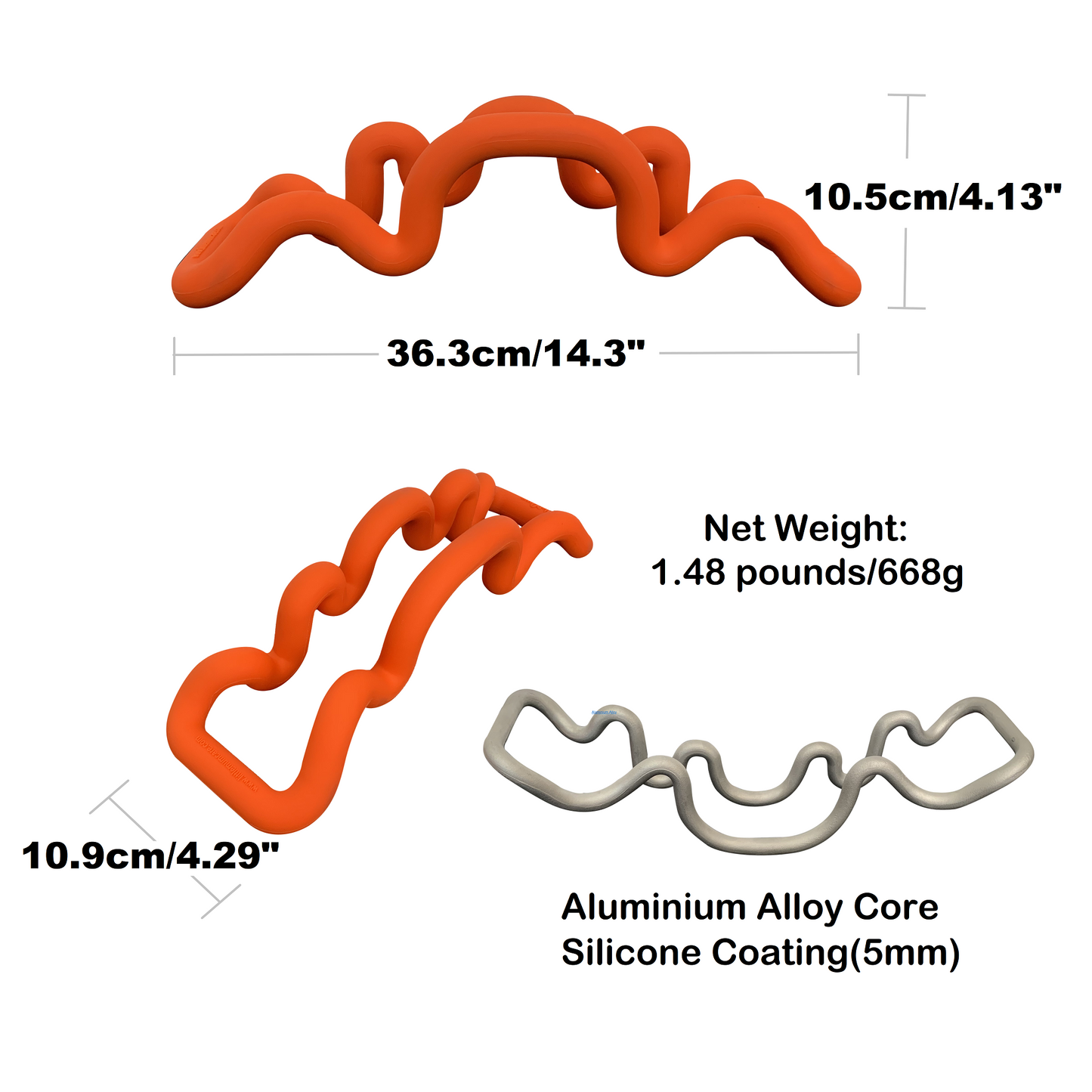
High-strength aluminum alloy internal frame. Food-grade silicone padding and exterior contact surface. Non-electric construction with no batteries, charging components, or motor.
Dimensions & Weight
Length: 14.3 in / 36.3 cm
Width: 4.3 in / 10.9 cm
Height: 4.13 in / 10.5 cm
Net weight: 1.31 lb / 596g
What’s Included
1 × LittleMum Back Deep Tissue Massager
1 × User Guide
Warranty
Backed by LittleMum’s 15-year warranty. Please refer to our Warranty Policy for full coverage details and exclusions.
Shipping & Returns
Free shipping is available within the United States, Australia, and Canada.
Returns are accepted within 30 days. We provide the return label, and a flat $5 return fee is deducted from the refund in USA. Please review our Returns Policy for full eligibility requirements.
FAQ
How firm is the massager?
It is intentionally firm and highly selective. The silicone provides limited cushioning, but the aluminum alloy core prevents the structure from collapsing under body weight. It should not feel like foam or a soft back cushion.
Which side should face my body?
Use the raised, sculpted ridges when you want concentrated muscular contact. Turn the product over when you want to use the curved structure as a supported back-stretching surface.
Where should I begin?
Begin on a bed or padded surface with your knees bent and feet supported. Position the tool beneath a muscular area of the middle or lower back where you can easily control your weight.
How should I position the central channel?
Align the open channel with the body’s midline so the raised ridges contact the muscles beside the spine or sacrum rather than applying concentrated pressure directly to them.
What should I do if it feels too strong?
Begin against a supportive chair, use a softer surface, place a folded towel over the contact ridges, or keep more of your weight supported through your feet. Move away immediately if the pressure feels sharp, numbing, radiating, or difficult to control.
How long should my first session be?
Begin with approximately three to five minutes in one position. Lift your weight away before repositioning the tool, and increase the duration only when the pressure remains comfortable and controlled.
Can it be used on the hips or gluteal area?
Yes. Position the ridges beneath the muscular part of the hip or gluteal area and shift your body weight gradually toward one side. Avoid concentrated pressure directly on the sacrum, tailbone, hip bone, or any area producing nerve-like symptoms.
Can it be used as a back stretcher?
Yes. Turn the tool over and use its curved structure as a supported surface beneath the back. This provides a passive extension position, but the product should not be described as correcting spinal alignment or treating a structural spinal condition.
How is this different from the Back Trigger Point Massager?
The Back Trigger Point Massager is a larger, heavier all-silicone tool with fourteen nodes. It provides broader, more stable multi-point contact across the back and gluteal area.
The Back Deep Tissue Massager is lighter and structurally firmer. Its aluminum alloy core and sculpted ridges create more concentrated pressure in a smaller area.
How is this different from the Shoulder Deep Tissue Massager?
The Shoulder Deep Tissue Massager has a compact, open shape designed mainly for selective positioning around the shoulder blades and upper-to-middle back.
The Back Deep Tissue Massager has a longer curved structure designed primarily for the middle back, lower back, hips, and gluteal area, with an additional supported-stretching orientation.